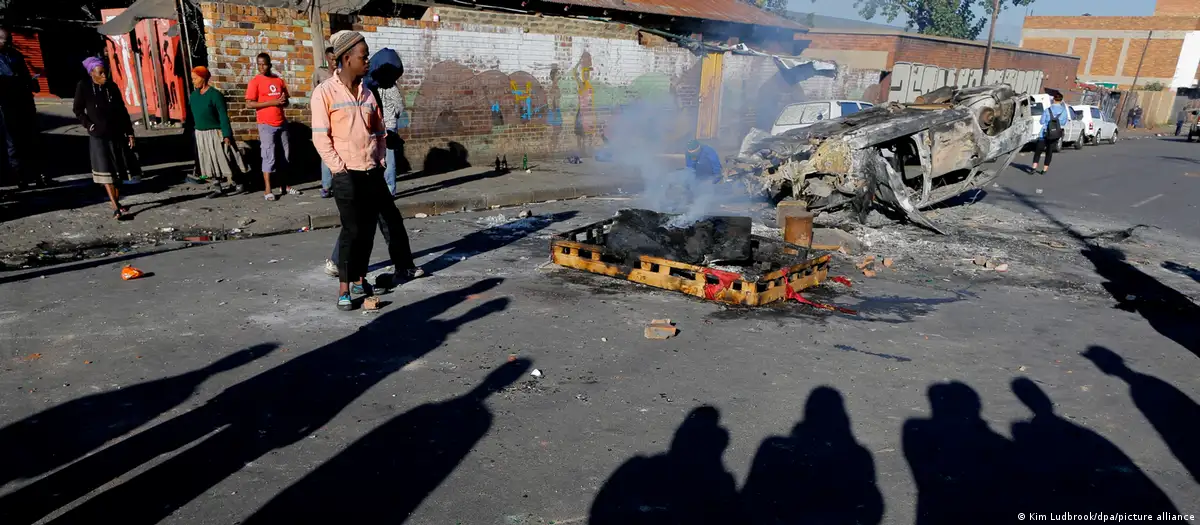
Critics are asking if the government’s reaction to xenophobia is effective as attacks against migrants reemerge in some parts of South Africa.
Violence against migrants from Zimbabwe, Nigeria, Somalia, Ethiopia, Malawi, Mozambique, Ghana, and Zambia has frequently occurred in South Africa. Nigeria called South Africa’s acting high commissioner earlier this month, stressing the escalating demonstrations against African migrants.
Anti-immigrant riots in 2008 claimed almost 60 lives, and similar disturbances reappeared in 2015 and 2016. At least 12 people were killed in 2019 when armed mobs stormed foreign-owned businesses in Johannesburg, including 10 South Africans.
Deeper crises are blamed on migration
The violence is often linked to frustrations over unemployment, crime, overcrowded services and poor living conditions — grievances that are frequently redirected toward migrants.

However, Loren Landau, a senior migration researcher at University of the Witwatersrand’s (Wits) African Centre for Migration and Society in Johannesburg, argued that the roots run deeper.
“The scapegoating and demonisation of migrants merely draw people’s attention away from the true source of South Africa’s problems and erodes democracy while putting the welfare of many people — both our own citizens and foreigners — at risk,” Landau said in an article published by Wits on May 21.
“Migrants are not the source of any of South Africa’s challenges. There are too few to make a substantial impact on employment or crime,” he added.
Government defends response to xenophobia
South Africa’s government has said it condemns violence against foreign nationals and is working to strengthen social cohesion and migration management.
Foreign Minister Ronald Lamola recently warned against civilians taking immigration enforcement into their own hands.
“It is not the responsibility of civilians to enforce the law,” Lamola told DW. “Where people are told, ‘You are not South African, you must go home,’ that is xenophobia.”
Lamola rejected claims that targeting migrants would solve South Africa’s economic problems.
“The economic challenges and unemployment issues will not be resolved by chasing anyone,” Lamola said. “This is not just a security issue, it is an economic and social issue.”
Cabinet Minister Khumbudzo Ntshavheni also defended government efforts while condemning vigilantism.
“We cannot allow anyone who is not law enforcement to demand people’s passports,” she said.
Activist groups deepen migration tensions
Groups such as Operation Dudula, which campaigns against undocumented migration, have become increasingly influential in public debate.
Supporters argue undocumented migration places pressure on jobs, healthcare, and housing. Critics, however, say such movements risk fueling xenophobia and vigilantism.
Patrick Mokgalusi, a member of Operation Dudula, defended the movement.
“People are in charge now because government has failed us. There’s no turning back,” he told DW, calling for “mass deportations for illegal foreigners.”
Vusumuzi Sibanda, chairman of the refugee advocacy group African Diaspora Global Network, warned that some official responses risk worsening tensions.
“In some cases the response appears to be worsening the situation,” said Sibanda, pointing to allegations that vulnerable people seeking protection during unrest were dispersed with rubber bullets.
Leave a Reply